
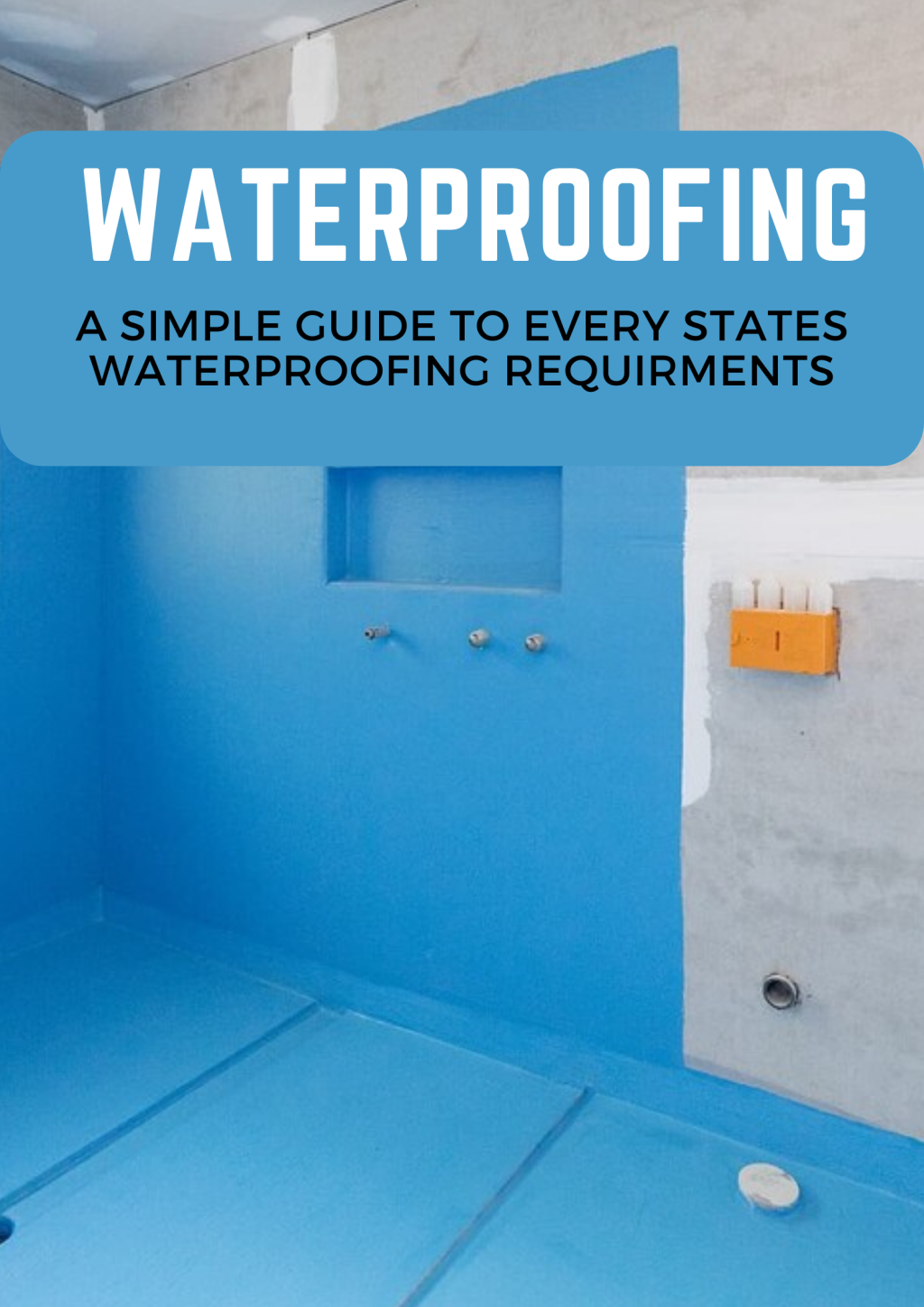
Mate I can not tell you the amount of debate and discussion I have had with how a bathroom should be waterproofed and what does not need to waterproofed when completing a bathroom renovation in Australia.
It is by the most concerned a client will be about their renovation due to either having water damage effect them before or they have bought a house with waterproofing problems.
Below is a guide that will cover the national standards for waterproofing your bathroom in Australia and after that each state by state which is where it gets confusing to everyone.
Now these are only the current waterproofing standards which have changed almost every year.

National Standards (All States)
Typical minimum requirements for waterproofing a bathroom in Australia as of 2025 going into 2026:
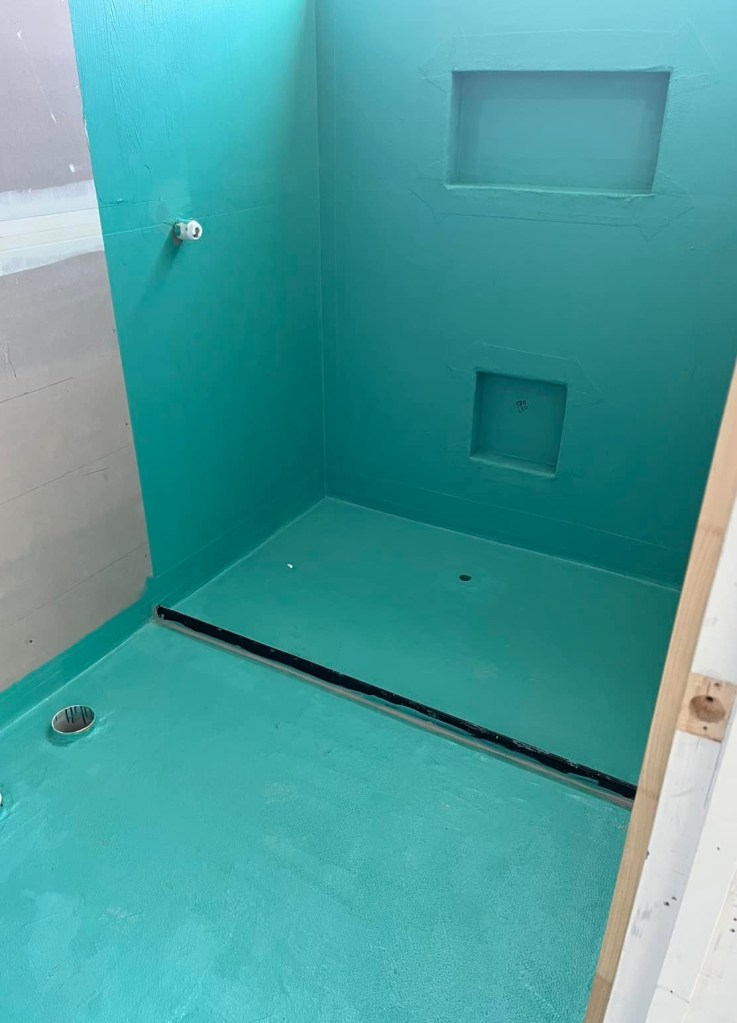
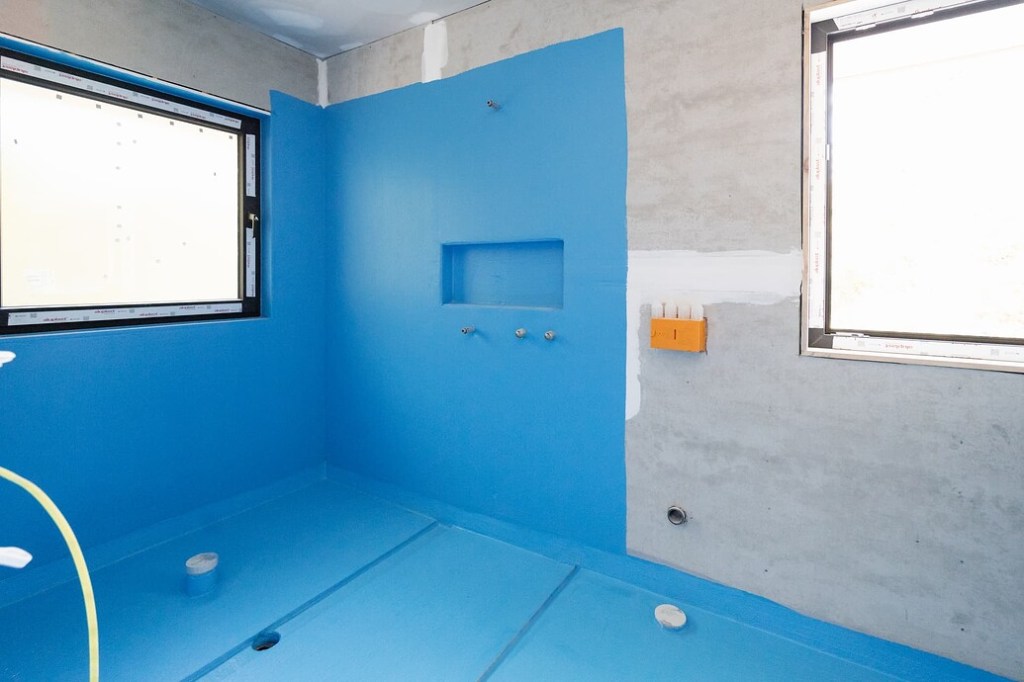
- Shower floors and walls waterproofed to 1800 mm above finished floor, or 50 mm above the shower rose—whichever is higher
- Bathroom walls around wet fittings waterproofed to 150 mm minimum
- Enclosed showers require full-floor waterproofing; wet-room/open showers need entire room floor plus walls to 1500 mm radius
- Upper-level or timber floors require the whole floor area waterproofed
- Floor gradients to drains must fall between 1:80 and 1:50
State-by-State Waterproofing Requirements
Below I cover the unique or different requirements for each state that differ from the national requirements or add to the national requirements of waterproofing your bathroom.
New South Wales (NSW)
- Must comply with NCC + NSW Building Code/Council overlay
- Only licensed waterproofers can issue compliance certificates—no homeowner DIY in wet areas
- Certificates are required to pass inspection and for insurance/sales
Queensland (QLD)
- Waterproofing must conform to NCC 2022 Part 10.2 + AS 3740:2021 under QDC MP 4.5
- Unenclosed showers may require additional drainage and show detailed plans at application stage
- Licensed QBCC practitioners must carry out work and provide Form 43/16 compliance
Victoria (VIC)
- Must meet NCC + VBA guidelines for fully waterproofed floors & walls:
- Floor and wall areas to 150 mm; shower walls to 1800 mm
- Membrane must be continuous and bond-breakers properly placed
- Certified plumbers must lodge certificates with VBA within 5 business days of completion of the waterproofing.
Western Australia (WA), South Australia (SA), Tasmania (TAS), ACT, NT
- Adhere to NCC + AS 3740.
- Licensed professionals recommended, and compliance certificates are typically mandatory
- DIY may be permitted in some jurisdictions and most often do not require a licensed professional to carry out the waterproofing by recommend
Who Is Allowed To Waterproof Your Bathroom In Australia
In NSW and QLD you need to have a licenced tradesman waterproof your bathroom it is mandatory.
In Victoria you can waterproof your bathroom without a licences as well as Western Australia, South Australia, Tasmania and North Territory
You may require getting the waterproofing checked out by a licenced tradesman in these states however
Consequences of Non-Compliance Waterproofing Rules
One of the biggest consequences of non complying with your states waterproofing rules is the possible voided insurance, structural damage, mould, and resale issues
The other also and most obvious issue with doing your own waterproofing if you have never done anything like before is if you spend all the money doing the bathroom and it starts leaking into the wall not long after the only solution is to redo it but that is not fun.
Below is a simple chart outlining the bathroom waterproofing rules and regulations in each Australian start
| State | Licensing Requirement | Certification | Height/Floor Requirements |
|---|---|---|---|
| NSW | Licensed technician only | Mandatory | Shower walls 1800 mm, walls 150 mm, full floor on upper levels |
| QLD | QBCC licensed required | Form 43/16 | NCC+QDC 10.2 + AS 3740:2021; drainage+gradients 1:80–1:50 |
| VIC | Recommended licensed pro | VBA lodgement | Shower walls 1800 mm, walls 150 mm, floors fully waterproofed |
| WA/SA/TAS etc. | DIY allowed with cert | Compliance required | NCC + AS 3740 standards |
Final Tips
- Always request proof of licensing and compliance certificates—a must for insurance, resale, and safety.
- Consider engaging a professional for reliable, guaranteed compliance.
- Use high-quality membranes and test thoroughly—future structural issues aren’t worth the savings.
- Only waterproof your own bathroom legally as a last resort
- Understand winter waterproofing is different to summer waterproofing
Final Throughs
Waterproofing bathrooms is governed nationally but enforcement and licensing vary by state. NSW and QLD impose strict licensing; VIC, WA, SA, TAS, ACT, and NT allow more flexibility but may require certification.
The reality is as long as you hire a trusted professional to waterproof your bathroom you will be fine. When I first started waterproofing, it had only came in as real legal requirement so with the advances in waterproofing techniques and the product themselves you should never have a problem
If you have any questions or need any advice on waterproofing standard in Australia or waterproofing your own bathroom just follow one of the links below
Instagram @jimthebathroomguy
It’s important to note that all our advice is general in nature and all bathrooms are unique so always speak to your local qualified tradesman for the best advice.


 Jim The Bathroom Guy
Leave a comment